The world of glass manufacturing, particularly in the creation of glass containers and other glass products, relies heavily on understanding the nuances of mirror kinds. These aren’t simply reflective surfaces; they are engineered components with diverse applications spanning industries from cosmetics and healthcare to automotive and interior design. The ability to specify and utilize the correct type of mirror is crucial for product performance, safety, and aesthetic appeal.
Globally, the demand for high-quality mirrors is consistently growing, driven by increasing consumer spending on personal care, home improvement, and sophisticated automotive features. According to market research, the global mirror market is projected to reach substantial figures in the coming years, highlighting its economic significance. This growth is particularly pronounced in emerging economies, where infrastructure development and rising disposable incomes are fueling demand. Understanding mirror kinds is, therefore, not merely a technical pursuit but a commercially vital one.
The challenge lies in navigating the complexity of available options. With various coatings, substrates, and manufacturing processes, selecting the optimal mirror for a given application requires expertise. Issues arise from inconsistent quality standards, the need for specialized manufacturing capabilities, and the increasing demand for sustainable and environmentally friendly mirror production techniques. Addressing these challenges requires a thorough comprehension of mirror kinds and their unique properties.
The Core Attributes of mirror kinds
At their core, mirror kinds are defined by their reflective properties, but this is just the starting point. Key attributes include the type of coating used (typically silver, aluminum, or gold), the substrate material (glass, acrylic, or polymer), and the level of reflectivity and clarity. Different coatings offer varying levels of durability, corrosion resistance, and spectral reflectivity, impacting the mirror’s suitability for diverse environments.
Furthermore, the quality of the glass substrate is paramount. Imperfections in the glass can distort the reflected image, reducing the mirror’s functionality. Thickness, flatness, and optical quality are critical factors. Modern manufacturing techniques focus on minimizing these imperfections to achieve optimal image fidelity.
The Historical Development of mirror kinds
The history of mirrors is a fascinating journey from polished obsidian and bronze to the sophisticated glass-backed mirrors we use today. Early civilizations relied on natural surfaces for reflection, but the first true mirrors were crafted from polished metal. It wasn't until the 16th century that Venetian glassmakers perfected the technique of applying a tin-mercury amalgam to glass, creating a more accurate and durable reflective surface.
The 19th century witnessed significant advancements with the introduction of silver-backed mirrors, which offered superior reflectivity and were less toxic than mercury-based mirrors. The 20th and 21st centuries have seen continuous innovations in coating technologies, leading to the development of specialized mirror kinds with enhanced properties like UV protection and anti-fogging capabilities.
These developments have profoundly impacted numerous fields, from scientific instrumentation to everyday consumer products. Understanding this historical progression provides crucial context for appreciating the current state of mirror technology and anticipating future innovations.
The Chemical Composition of mirror kinds
The chemical composition of mirror kinds is a multifaceted subject. The glass substrate typically consists of silica (SiO2) as its primary component, often combined with sodium oxide (Na2O), calcium oxide (CaO), and other modifiers to adjust properties like melting point, thermal expansion, and chemical resistance. The specific formulation varies depending on the intended application.
However, the reflective layer is where the most significant chemical activity occurs. Silver, the most common reflective material, is applied as a thin film, often through a chemical reduction process. This silver layer is extremely vulnerable to corrosion and is therefore protected by one or more layers of copper, and finally, a protective coating of paint or other durable material. Alternative reflective materials, such as aluminum, utilize different deposition techniques.
The precise chemical composition of these layers significantly impacts the mirror’s durability, reflectivity, and resistance to environmental factors. For example, specialized coatings can be applied to enhance UV protection or improve scratch resistance, altering the overall chemical profile of the mirror kinds.
The Performance Metrics of mirror kinds
Evaluating the performance of mirror kinds requires a range of standardized metrics. Reflectivity, measured as the percentage of incident light reflected, is a primary indicator of image brightness. Clarity, assessed by minimizing distortion and haze, determines image fidelity. Durability is tested through abrasion resistance, impact resistance, and corrosion resistance tests.
Other crucial parameters include thermal stability (resistance to deformation under temperature fluctuations), chemical resistance (ability to withstand exposure to cleaning agents and corrosive environments), and spectral selectivity (the mirror’s ability to reflect specific wavelengths of light). These metrics are vital for ensuring the mirror’s reliability and longevity in diverse applications.
Performance Evaluation of mirror kinds Methods
Global Application Landscapes of mirror kinds
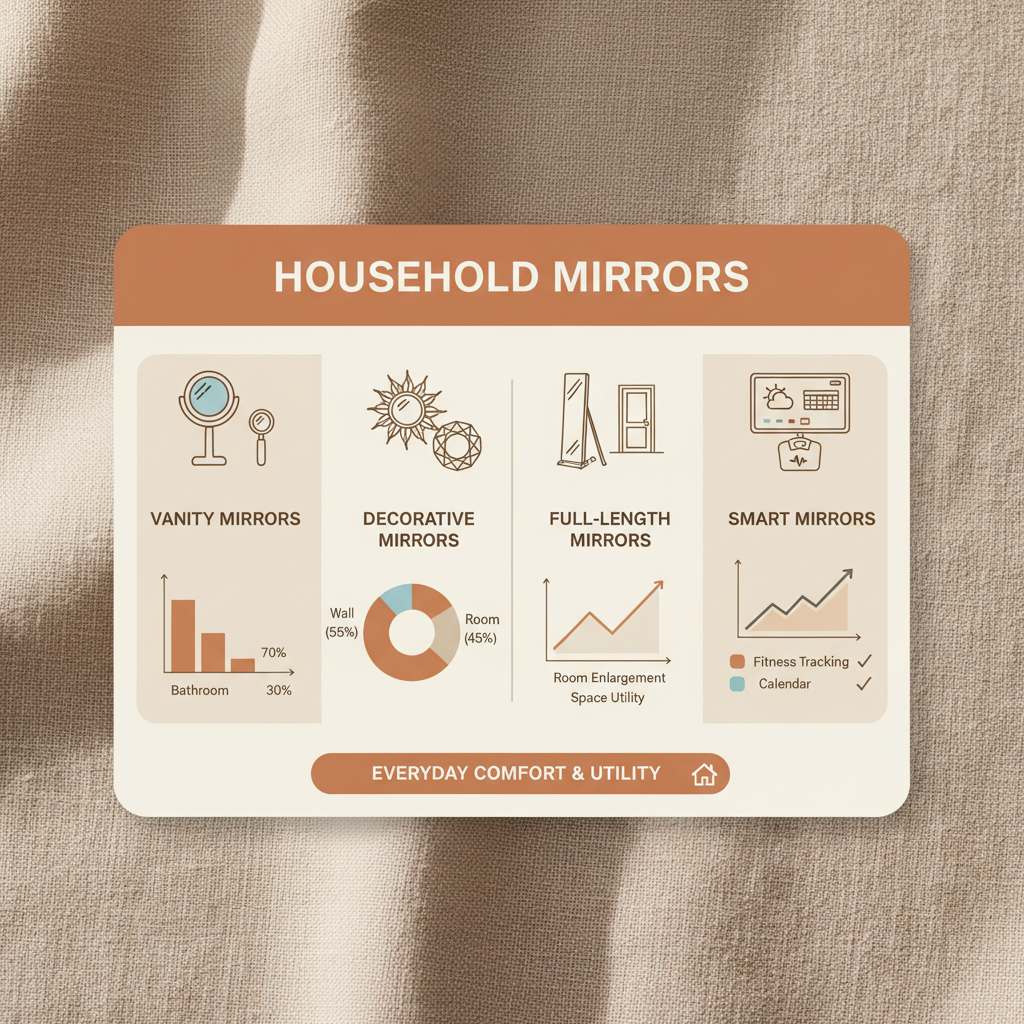
The applications of mirror kinds are incredibly diverse, spanning numerous industries. In the automotive sector, mirrors are critical for driver visibility and safety. The cosmetics industry relies on mirrors for makeup application and personal grooming. Healthcare utilizes mirrors in medical instruments and diagnostic equipment.
Architectural applications range from decorative wall mirrors to functional bathroom mirrors. The furniture industry incorporates mirrors into cabinets, tables, and other home furnishings. Furthermore, specialized mirrors are used in solar energy systems for concentrating sunlight and in optical instruments for scientific research. These varying demands necessitate tailored mirror solutions optimized for each specific application.
The Economic Impact of mirror kinds
The global mirror manufacturing industry contributes significantly to economic activity, generating employment, fostering innovation, and driving trade. The market is characterized by both large multinational corporations and smaller specialized manufacturers. Emerging economies, particularly in Asia, are becoming increasingly dominant players in mirror production, driven by lower labor costs and access to raw materials.
The economic impact extends beyond manufacturing to include ancillary industries such as glass production, chemical suppliers, and transportation services. Moreover, the demand for high-quality mirrors fuels investment in research and development, leading to the creation of new technologies and improved production processes. The total economic value chain associated with mirror kinds is substantial and growing.
Technological advancements in automation and precision manufacturing are further reshaping the industry, increasing efficiency and reducing costs, thereby enhancing the economic competitiveness of mirror producers globally.
Future Innovations in mirror kinds Manufacturing
The future of mirror kinds manufacturing is poised for significant innovation. Research is focused on developing new coating materials with enhanced reflectivity, durability, and environmental friendliness. Nanotechnology is playing an increasingly important role, enabling the creation of mirrors with tailored optical properties.
Smart mirrors, incorporating integrated displays and sensors, are gaining traction in both consumer and industrial applications. These intelligent mirrors can provide real-time information, interactive features, and personalized experiences. Furthermore, sustainable manufacturing practices, such as reducing waste and utilizing recycled materials, are becoming increasingly important.
The integration of artificial intelligence and machine learning into production processes promises to optimize efficiency, improve quality control, and enable the creation of custom-designed mirrors tailored to specific customer needs. These advancements will reshape the industry landscape and unlock new opportunities for growth.
Core Aspects of Future mirror kinds Manufacturing
| Innovation Area |
Technology Driver |
Potential Impact |
Implementation Timeline |
| Advanced Coatings |
Nanomaterials |
Enhanced reflectivity, durability, and scratch resistance |
3-5 years |
| Smart Mirror Integration |
IoT & Display Technology |
Interactive features, personalized experiences, real-time data |
1-3 years |
| Sustainable Production |
Recycled Materials & Waste Reduction |
Reduced environmental impact, lower production costs |
Ongoing |
| Automated Manufacturing |
Robotics & AI |
Increased efficiency, improved quality control |
2-4 years |
| Customizable Mirrors |
3D Printing & Digital Fabrication |
Unique designs, tailored dimensions, specialized functionalities |
5+ years |
| Enhanced Durability |
Surface Treatment Technologies |
Increased resistance to scratches, chemicals, and corrosion |
3-5 years |
FAQS
Silvered mirrors offer higher reflectivity (around 99%) and produce a brighter, more accurate image. However, they are more expensive and susceptible to corrosion. Aluminum mirrors, while less reflective (around 95%), are more durable, resistant to corrosion, and generally more cost-effective, making them ideal for applications where longevity and affordability are paramount. The choice between the two depends on the specific requirements of the application.
Several factors indicate a high-quality mirror. Look for minimal distortion in the reflection – a flat, clear image is crucial. Check for even coating application, avoiding any blemishes or inconsistencies. Examine the edges for smoothness and absence of chips. A higher-quality glass substrate will also contribute to clarity and durability. Reputable manufacturers typically offer quality certifications.
Avoid abrasive cleaners and harsh chemicals. The ideal cleaning solution is a mixture of distilled water and white vinegar. Spray the solution onto a microfiber cloth (never directly onto the mirror) and gently wipe the surface. Avoid excessive pressure, and always dry with a clean, dry microfiber cloth to prevent streaks.
Yes, the mirror industry is increasingly embracing sustainable practices. Utilizing recycled glass, reducing waste through efficient manufacturing processes, and employing water-based coatings are all eco-friendly options. Some manufacturers are also exploring bio-based materials for mirror substrates and backing. These efforts contribute to a reduced environmental footprint.
Extreme temperature fluctuations can cause the glass substrate to expand or contract, potentially leading to distortion or cracking. The reflective coating can also be affected, particularly in humid environments where corrosion is more likely. Choosing mirrors with appropriate thermal expansion coefficients and protective coatings is vital for applications in variable temperature conditions.
The lifespan of a silvered mirror depends on environmental conditions and maintenance. In a typical indoor environment with proper care, a silvered mirror can last for 20-30 years. However, exposure to high humidity, corrosive chemicals, or physical damage can significantly reduce its lifespan. Regular cleaning and protective coatings can help extend its longevity.
Conclusion
In conclusion, mirror kinds are far more complex than simple reflective surfaces. Their properties, manufacturing processes, and applications are intricately linked to advancements in materials science, engineering, and sustainability. A thorough understanding of these factors is crucial for optimizing performance, ensuring durability, and minimizing environmental impact. The evolution of mirror technology continues to drive innovation across diverse industries.
Looking ahead, we can anticipate continued advancements in smart mirror technology, sustainable manufacturing practices, and customized mirror solutions. Investing in research and development, fostering collaboration between manufacturers and end-users, and prioritizing environmental responsibility will be key to unlocking the full potential of mirror kinds. To learn more about our range of mirror products and solutions, visit our website at www.chnmst.com.