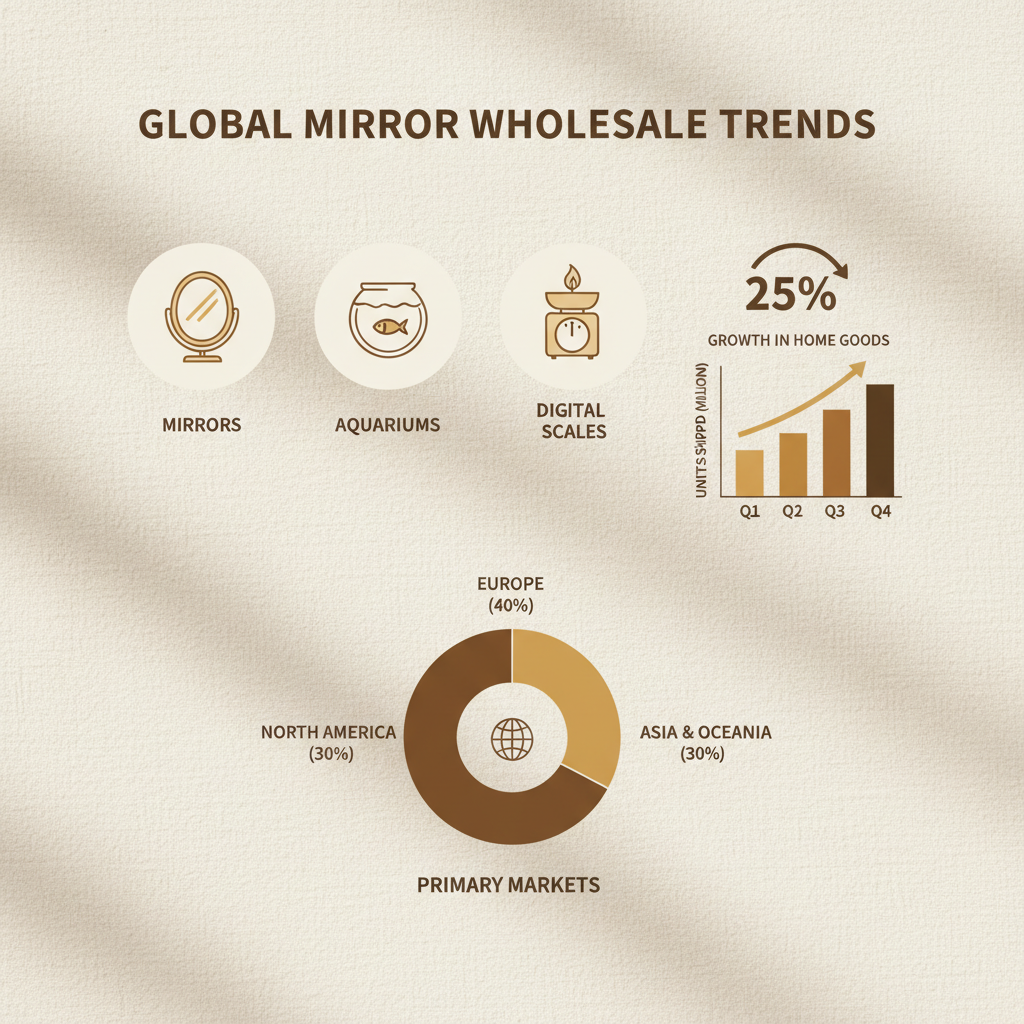
The global glass container industry is a multi-billion dollar market, vital for packaging food, beverages, pharmaceuticals, and cosmetics. Driven by increasing consumer demand for sustainable and recyclable packaging, the mirror wholesale sector supporting the production of these containers is experiencing significant growth. This demand extends beyond just raw materials, encompassing specialized mirrors used in quality control, manufacturing processes, and, increasingly, in aesthetically pleasing product displays. Understanding the nuances of this market is critical for businesses seeking to capitalize on emerging opportunities and navigate potential challenges.
The rise of e-commerce and direct-to-consumer brands has further fueled the need for robust and reliable packaging solutions, creating a strong demand for high-quality glass containers. Alongside this, the emphasis on visual appeal – from the shelf in a supermarket to the delivery box at a customer’s door – necessitates investment in precision manufacturing, including the use of specialized mirrors for inspection and process monitoring. mirror wholesale plays a pivotal role in ensuring the consistent quality and aesthetic standards demanded by today’s competitive market.
Ultimately, efficient and cost-effective mirror wholesale practices aren't just about supplying a product; they’re about supporting a critical supply chain that impacts a diverse range of industries and consumer experiences worldwide. This makes understanding the factors influencing this market – from material sourcing to technological advancements – increasingly important for sustained growth and success.
The Global Significance of Mirror Wholesale
The demand for high-quality glass containers, integral to numerous industries, directly correlates with the need for precision mirrors in their production. According to the UN Comtrade database, global trade in glass and glass products reached $187.6 billion in 2022. This illustrates a robust market that depends heavily on the consistent supply of specialized mirrors used in quality control and manufacturing. A reliable mirror wholesale operation is, therefore, a foundational element of this global trade.
Disruptions in the mirror wholesale supply chain – whether due to geopolitical factors, natural disasters, or production limitations – can have a cascading effect on the entire glass manufacturing process, impacting industries from food and beverage to pharmaceuticals. Ensuring resilience and redundancy in mirror sourcing is becoming increasingly critical for manufacturers aiming to maintain production continuity and meet evolving consumer demands.
Defining Mirror Wholesale in the Glass Industry
Mirror wholesale, in the context of glass manufacturing, refers to the bulk supply of specialized mirror types used throughout the production process. This isn’t simply about the retail sale of mirrors; it's a B2B transaction focused on providing industrial-grade mirrors in large quantities to glass container manufacturers, quality control facilities, and related businesses. These mirrors are often specifically engineered for durability, optical clarity, and resistance to the harsh chemical environments found in glass production.
This practice is intrinsically linked to modern industrial processes, ensuring efficient production lines and maintaining high standards of product quality. It directly addresses the need for precision inspection, defect detection, and consistent manufacturing output. Without a streamlined mirror wholesale system, glass manufacturers would face significant challenges in maintaining their competitive edge.
Beyond the functional aspect, wholesale mirror supply also impacts cost efficiency. Negotiating favorable pricing through bulk purchases is crucial for manufacturers, enabling them to control production costs and offer competitive pricing to their customers. A strong relationship with a reliable mirror wholesale partner is, therefore, a strategic asset for any glass container manufacturer.
Core Components of Effective Mirror Wholesale
Several core components define an effective mirror wholesale operation. First, product diversity is paramount. Manufacturers require various mirror types – including first surface mirrors, dichroic mirrors, and inspection mirrors – to cater to different stages of the glass production process. A wholesale supplier must offer a comprehensive catalog to meet these diverse needs.
Secondly, supply chain reliability is crucial. Timely delivery and consistent availability are non-negotiable. Delays in mirror supply can halt production lines, leading to significant financial losses. Third, quality assurance is essential. Mirrors used in glass manufacturing must meet stringent quality standards to ensure accurate inspection and defect detection. Suppliers should provide certifications and testing data to demonstrate compliance.
Finally, technical support is a valuable asset. A knowledgeable supplier can offer guidance on selecting the appropriate mirror type for specific applications and troubleshoot any issues that may arise. This proactive support enhances the overall value proposition and fosters long-term partnerships.
Global Applications of Mirrors in Glass Manufacturing
Mirrors are integral to quality control processes throughout the glass manufacturing lifecycle. They are used in automated inspection systems to detect defects such as bubbles, scratches, and distortions. High-precision mirrors are also crucial in laser cutting and shaping of glass, ensuring accurate dimensions and clean edges. This is particularly important for specialized glass containers requiring precise tolerances.
In regions with established glass manufacturing hubs, like China, Europe, and the United States, the demand for specialized mirrors is consistently high. However, emerging markets in Southeast Asia and South America are also witnessing growing demand as their glass industries expand. Specifically, in post-disaster relief operations, quick deployment of glass container manufacturing plants utilizing efficiently supplied mirrors can be life-saving for packaging essential resources.
Mirror Wholesale Application Breakdown
Advantages and Long-Term Value of Optimized Mirror Supply
Optimizing mirror wholesale offers significant tangible benefits. Reduced downtime due to consistent supply translates directly into increased production capacity and lower operational costs. Utilizing high-quality mirrors improves the accuracy of quality control processes, minimizing defects and reducing waste. This, in turn, enhances brand reputation and customer satisfaction.
The long-term value extends beyond cost savings. A commitment to sourcing durable, reliable mirrors contributes to sustainable manufacturing practices. Reduced waste, extended mirror lifespan, and efficient resource utilization all align with environmental responsibility. Furthermore, a dependable mirror supply chain fosters trust and strengthens relationships with key suppliers, creating a more resilient and responsive operation.
Future Trends and Innovations in Mirror Technology
The future of mirror technology is focused on increased precision, durability, and integration with advanced manufacturing systems. Research into new coating materials is yielding mirrors with improved reflectivity, scratch resistance, and chemical inertness. Smart mirrors, equipped with sensors and data analytics capabilities, are also emerging, offering real-time monitoring and feedback on the glass manufacturing process.
Digital transformation is driving the adoption of automated mirror inspection systems. These systems utilize high-resolution cameras and advanced algorithms to detect even the smallest defects with greater speed and accuracy than traditional methods. The integration of AI and machine learning will further enhance these capabilities, enabling predictive maintenance and proactive quality control.
Challenges and Solutions in Mirror Wholesale Logistics
One of the primary challenges in mirror wholesale logistics is the fragility of the product. Mirrors are susceptible to damage during transportation and handling, requiring specialized packaging and careful handling procedures. Maintaining consistent quality across large shipments is also a key concern.
To address these challenges, suppliers are investing in robust packaging solutions, utilizing materials like custom foam inserts and shock-absorbing cushioning. Implementing rigorous quality control checks at each stage of the supply chain – from production to delivery – is also essential. Furthermore, utilizing advanced tracking and monitoring technologies provides greater visibility and allows for proactive intervention in case of potential issues.
Another challenge is managing lead times, particularly for specialized mirror types. Solutions include maintaining buffer stock of commonly used mirrors, diversifying sourcing options, and establishing strong relationships with reliable suppliers capable of meeting fluctuating demand.
Overview of Critical Factors for Successful Mirror Wholesale Logistics
| Packaging Quality |
Supplier Reliability |
Lead Time Management |
Cost Efficiency |
| Excellent (9/10) - Minimal damage during transit. |
Highly Reliable (8/10) - Consistent on-time delivery. |
Proactive (7/10) - Buffer stock and diversified sourcing. |
Competitive (7/10) - Bulk discounts and optimized shipping. |
| Good (7/10) - Occasional minor damage. |
Reliable (6/10) - Generally on-time delivery. |
Reactive (6/10) - Responds to delays. |
Average (5/10) - Standard pricing. |
| Average (5/10) - Frequent damage during transit. |
Unreliable (4/10) - Frequent delays. |
Poor (3/10) - Limited inventory and single sourcing. |
High (2/10) - Premium pricing. |
| Poor (2/10) - Significant damage during transit. |
Highly Unreliable (1/10) - Consistent delays and stockouts. |
Non-Existent (1/10) - No proactive management. |
Prohibitive (1/10) - Exceeds budget constraints. |
| Good (7/10) - Improved packaging standards. |
Reliable (6/10) - Good track record with minimal issues. |
Proactive (7/10) - Good stock levels and multiple sources. |
Competitive (7/10) - Flexible pricing options. |
| Excellent (9/10) - Innovative packaging with superior protection. |
Highly Reliable (8/10) - Strong commitment to on-time delivery. |
Proactive (8/10) - Excellent forecasting and inventory management. |
Highly Competitive (8/10) - Best value for money. |
FAQS
When selecting a mirror wholesale supplier, prioritize product diversity, supply chain reliability, quality assurance certifications, and technical support. Consider their experience serving the glass manufacturing industry specifically and their ability to meet your unique requirements regarding mirror size, shape, and coating. Checking their customer references and ensuring they have a robust quality control process are also crucial steps.
The key to minimizing mirror damage during shipping lies in proper packaging. Ensure the supplier utilizes custom foam inserts, shock-absorbing cushioning materials, and sturdy outer cartons. Request that mirrors be individually wrapped and clearly labeled as fragile. Consider negotiating shipping insurance to cover potential losses. Regularly reviewing the shipping process with your supplier can also help identify and address potential vulnerabilities.
Common mirror types include first surface mirrors (offering the highest reflectivity), dichroic mirrors (used for selective reflection and transmission of light), and inspection mirrors (designed for detecting defects). The specific type required depends on the application. For example, first surface mirrors are ideal for laser cutting, while inspection mirrors are vital for quality control. Specialized mirrors with anti-reflective coatings are also used in certain applications.
Quality certifications are paramount. Look for suppliers with ISO 9001 certification, demonstrating a commitment to quality management systems. Certifications specific to mirror manufacturing, such as those related to reflectivity, flatness, and durability, provide further assurance. Request documentation verifying the mirror's compliance with relevant industry standards and specifications.
Emerging trends include the development of smart mirrors with integrated sensors, advanced coating materials for improved durability and reflectivity, and the integration of AI-powered inspection systems. These technologies promise to enhance precision, reduce defects, and improve overall manufacturing efficiency. Staying informed about these advancements will allow you to optimize your processes and maintain a competitive edge.
Effective lead time management involves maintaining a buffer stock of commonly used mirrors, diversifying your sourcing options to reduce reliance on a single supplier, and establishing clear communication channels with your supplier. Accurate forecasting of demand is also crucial. Collaborating with your supplier to develop a just-in-time delivery system can minimize inventory costs while ensuring a consistent supply.
Conclusion
In conclusion, a robust and reliable mirror wholesale strategy is not merely a procurement function, but a critical component of successful glass manufacturing. From ensuring product quality and maximizing production efficiency to driving sustainable practices and fostering innovation, the benefits of optimized mirror supply are far-reaching and long-lasting. Prioritizing supplier reliability, product diversity, and technological advancements is paramount for sustained competitiveness.
Looking ahead, proactive investment in innovative mirror technologies and a commitment to strong supplier partnerships will be essential for navigating the evolving challenges and opportunities in the glass industry. By embracing these principles, manufacturers can unlock significant value, enhance their brand reputation, and secure a leading position in the global market. Visit our website at www.chnmst.com to explore our range of mirror solutions and discover how we can support your manufacturing needs.