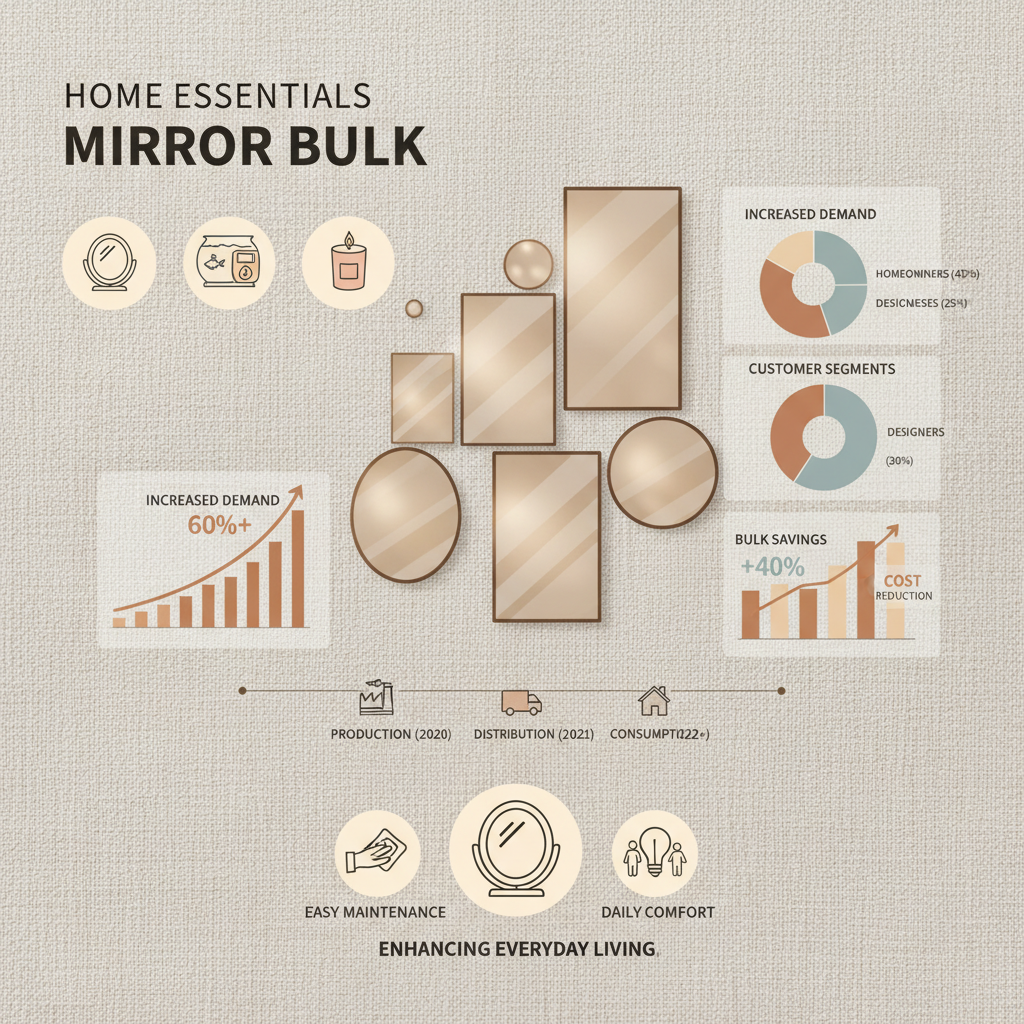
In the competitive landscape of modern interior design and industrial construction, the demand for high-quality reflective surfaces has led to a surge in the procurement of mirror bulk solutions. Whether for large-scale commercial developments, hotel chains, or retail furniture manufacturing, sourcing mirrors in volume is no longer just about reducing the unit price; it is about ensuring consistency in silvering quality, glass thickness, and edge finishing across thousands of units.
The global glass industry has evolved to support complex supply chains where mirror bulk orders enable architects and developers to execute ambitious projects without the risk of batch variation. By leveraging economies of scale, businesses can integrate premium features—such as copper-free eco-mirrors or high-definition silvering—into their standard offerings, thereby elevating the perceived value of the final installation while maintaining strict budget controls.
Understanding the nuances of bulk mirror procurement requires a balance between technical specifications and logistical efficiency. From managing the fragility of oversized sheets during transit to verifying ISO certifications for environmental safety, the process of acquiring mirror bulk is a critical operational pillar for any company specializing in commercial scales, LED mirrors, or luxury wall installations.
Global Market Dynamics of Mirror Bulk Sourcing
The global trade of glass products has seen a significant shift toward centralized manufacturing hubs that can handle massive mirror bulk orders. Data from international trade monitors suggests that the demand for mirrored surfaces in the Asia-Pacific and North American regions has grown steadily, driven by the rapid expansion of the hospitality and healthcare sectors. These industries require standardized, high-performance mirrors that meet strict safety regulations, such as shatter-proof backing and corrosion resistance.
However, the challenge lies in the volatility of raw material costs, particularly silver and high-float glass. Companies that optimize their mirror bulk strategy often enter into long-term contracts with manufacturers to hedge against price spikes. This stability allows for more accurate project bidding and ensures that large-scale installations, such as hotel mirror walls or gymnasiums, are completed on time and within budget.
Defining Technical Standards for Bulk Mirror Production
At its core, mirror bulk refers to the industrial-scale production and supply of mirrored glass sheets or pre-cut panels. Unlike custom artisanal mirrors, bulk production focuses on repeatability and adherence to strict tolerances. The primary goal is to achieve a uniform reflective index across every single piece, ensuring that when multiple panels are installed side-by-side, there is no visible distortion or color shift.
The manufacturing process involves a complex series of chemical depositions. High-quality bulk mirrors typically utilize a silvering process where a thin layer of silver is chemically deposited onto a float glass substrate, followed by several layers of protective copper and lead-free paint. For those sourcing mirror bulk, the "edge-to-edge" clarity and the absence of "black spots" or oxidation are the primary indicators of a premium product.
In modern industrial contexts, the definition of bulk mirrors has expanded to include specialized substrates. For instance, acrylic mirrors are often sourced in bulk for high-traffic public areas where safety is paramount, while tempered glass mirrors are preferred for bathroom and gym installations. This diversification means that a bulk procurement strategy must now account for different material properties based on the end-use application.
Core Components of High-Efficiency Mirror Bulk Logistics
The logistics of transporting mirror bulk shipments represent one of the most significant challenges in the glass industry. Due to the fragile nature of the material and the extreme weight of glass crates, specialized packaging is non-negotiable. Professional suppliers utilize A-frame crates and high-density foam separators to prevent friction and impact during ocean or road freight.
Furthermore, the scalability of a mirror bulk operation depends on the synchronization between the production line and the shipping schedule. Just-in-time (JIT) delivery models are becoming increasingly popular, where mirrors are cut and polished in the factory and delivered directly to the installation site, reducing the need for costly on-site storage and the risk of breakage in warehouses.
Cost efficiency in bulk sourcing is also tied to the optimization of shipping containers. By calculating the maximum possible load without compromising safety, companies can significantly lower the landing cost per square meter. This level of precision in mirror bulk logistics is what separates industry leaders from small-scale distributors.
Economic Advantages of Mirror Bulk Procurement
The most immediate advantage of opting for mirror bulk is the drastic reduction in the cost per unit. By consolidating orders, buyers can bypass the retail markup and negotiate directly with the manufacturer based on volume. This is particularly beneficial for companies producing LED mirrors or makeup mirrors, where the glass is a primary component of the bill of materials.
Beyond simple pricing, bulk procurement offers a strategic advantage in quality control. When a company orders mirror bulk from a single production batch, the chemical composition of the silvering and the thickness of the glass remain constant. This eliminates the "lottery effect" associated with small, fragmented orders, leading to lower rejection rates during final assembly.
Cost-Efficiency Analysis of Mirror Bulk Sourcing
Industrial Applications and Integration Case Studies
In the commercial real estate sector, mirror bulk is extensively used to create a sense of spatial expansion in luxury hotels and shopping malls. For example, in a recent high-rise project in Dubai, the developers sourced thousands of square meters of custom-tinted bulk mirrors to wrap the lobby columns, creating a seamless, futuristic aesthetic that would have been financially impossible using custom piece-by-piece orders.
Furthermore, the fitness industry relies heavily on mirror bulk for the installation of full-wall gym mirrors. These require specific safety certifications (such as safety film backing) to prevent injuries in case of breakage. By ordering in bulk, gym franchise owners can ensure that every location across a city maintains the exact same mirror clarity and safety standard, reinforcing brand consistency.
Sustainability and Eco-Friendly Silvering Trends
The traditional mirror manufacturing process often involved heavy metals like lead and copper, which posed environmental risks. However, the new wave of mirror bulk production is shifting toward "eco-friendly" or "copper-free" silvering. These mirrors are not only safer for the environment but also more resistant to corrosion, particularly in humid environments like bathrooms.
Sustainability in bulk procurement also extends to the reduction of waste. Advanced CNC cutting software used in bulk facilities allows for "nesting," where the shapes of the mirrors are optimized on a single large sheet to minimize glass scrap. This lean manufacturing approach reduces the carbon footprint of each mirror bulk order, aligning industrial growth with global green initiatives.
Moreover, the rise of recyclable glass substrates is transforming the lifecycle of bulk mirrors. Companies are now designing products that can be more easily stripped of their silvering at the end of their life, allowing the float glass to be recycled back into the production cycle. This circular economy approach is becoming a key requirement for government tenders and LEED-certified building projects.
Future Innovations in Smart Mirror Bulk Manufacturing
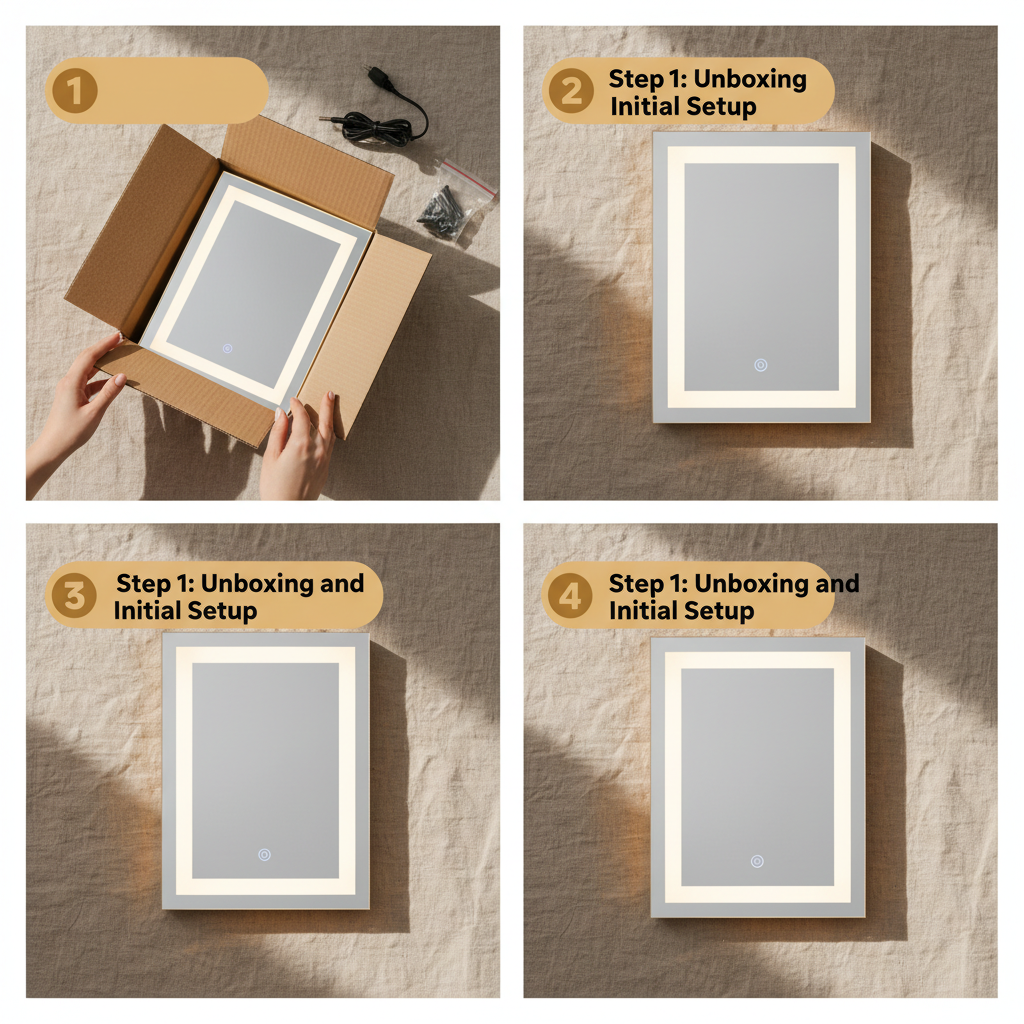
The future of mirror bulk lies in the integration of "smart" technologies directly into the glass substrate. We are seeing a transition from simple reflective surfaces to interactive displays. Bulk manufacturers are now producing mirrors with pre-integrated conductive layers, allowing for the mass production of LED mirrors, anti-fogging surfaces, and touch-sensitive controls for smart homes.
Automation and AI are also redefining how mirror bulk orders are processed. AI-driven quality inspection systems can now detect microscopic imperfections in a silvered sheet in milliseconds, ensuring that only flawless panels reach the customer. This reduction in human error significantly lowers the rate of on-site replacements and enhances overall project reliability.
As we look ahead, the convergence of nanotechnology and glass manufacturing will likely lead to "self-cleaning" bulk mirrors that repel dust and fingerprints. This innovation will be particularly valuable for high-traffic commercial areas, reducing maintenance costs for facility managers while maintaining the pristine look of the reflective surfaces.
Comparison of Mirror Bulk Material Specifications and Performance
| Material Type |
Reflective Quality |
Durability Score |
Primary Application |
| Standard Silver Float |
High |
7/10 |
Residential/Commercial |
| Copper-Free Eco Mirror |
Ultra-High |
9/10 |
Luxury Bathrooms |
| Acrylic Mirror Sheet |
Medium |
8/10 |
Public Spaces/Kids |
| Tempered Glass Mirror |
High |
10/10 |
Gyms/High-Impact |
| Tinted Bulk Mirror |
Stylized |
7/10 |
Interior Design |
| Smart Integrated Glass |
High |
8/10 |
Tech-Homes/Retail |
FAQS
The primary benefits include significant cost reductions through wholesale pricing and guaranteed quality consistency. When you source in bulk, all panels come from the same production batch, eliminating variations in reflection and thickness. Additionally, bulk orders allow for customized specifications, such as specific edge polishing or eco-friendly silvering, which are often unavailable in retail options.
Bulk mirrors are typically transported in reinforced A-frame wooden crates. These crates hold the glass vertically, which is the strongest position for the material. High-density foam or non-abrasive spacers are placed between sheets to prevent scratching and friction. For international shipping, these crates are often shrink-wrapped and secured with heavy-duty strapping to ensure zero movement during ocean freight.
Yes, copper-free silvering is highly recommended for bulk orders intended for bathrooms or coastal areas. Traditional silvering uses a copper layer that can oxidize and cause "black edge" corrosion when exposed to moisture. Copper-free alternatives are more chemically stable and corrosion-resistant, ensuring a longer lifespan for the installation and reducing the need for warranty replacements.
Absolutely. Most bulk manufacturers offer "cut-to-size" services using automated CNC machinery. You can provide a cutting list, and the factory will optimize the layout to minimize waste. This means you receive panels that are ready for immediate installation, saving you the time and cost of on-site cutting and polishing, which also reduces the risk of breakage at the project site.
Look for ISO 9001 for quality management and ISO 14001 for environmental management. If the mirrors are for the US market, ensure they meet ASTM standards for glass safety. For European markets, CE marking is essential. Additionally, ask for SGS or Intertek reports to verify that the silvering is lead-free and that the glass meets the specified thickness and clarity standards.
Depending on the volume and complexity (such as custom shapes or smart integrations), a typical production cycle ranges from 15 to 30 days. This includes the float glass procurement, silvering, curing, and cutting phases. Logistics can add another 20-45 days for international shipping. We recommend planning bulk orders at least 2-3 months before the installation date to account for customs and quality checks.
Conclusion
Sourcing mirror bulk is a strategic operational decision that extends far beyond mere cost-cutting. By focusing on technical precision, sustainable silvering processes, and rigorous logistical planning, businesses can ensure a high-standard finish for large-scale architectural and commercial projects. The integration of eco-friendly materials and smart-glass technology further ensures that bulk procurement remains relevant in an era of green building and digital transformation.
As the industry moves toward greater automation and sustainable practices, the value of establishing a partnership with a reliable bulk manufacturer becomes paramount. Whether you are upgrading a commercial hotel chain or scaling a line of LED mirrors, prioritizing quality consistency and logistics efficiency will yield long-term dividends in brand trust and operational reliability. For those looking to elevate their reflective surface standards, visit our website: www.chnmst.com.