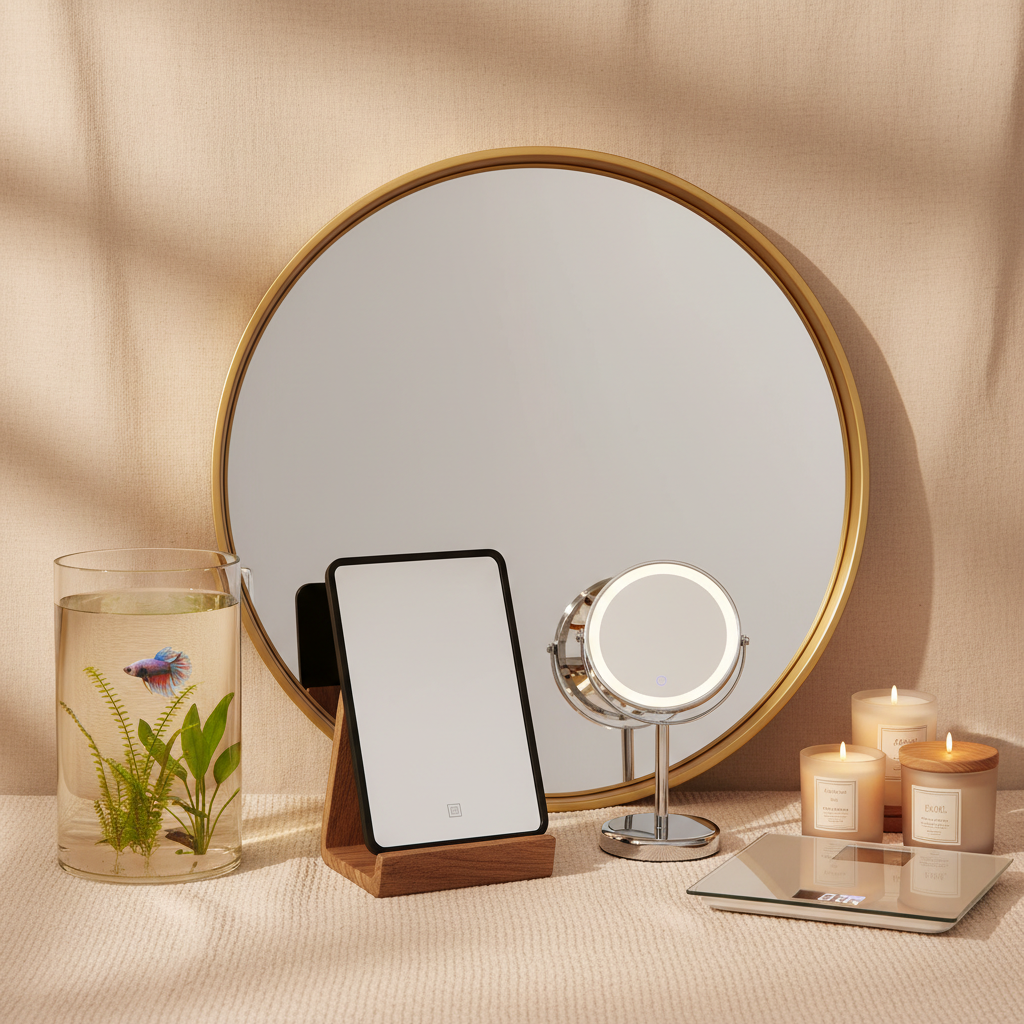
Finding high-quality yet cheap floor mirrors often feels like a trade-off between aesthetic appeal and structural integrity. For many homeowners and interior designers, the goal is to find a piece that maximizes light and space without exceeding a strict budget, yet avoiding the common pitfalls of distorted reflections and fragile frames.
The market for budget-friendly mirrors has expanded significantly, moving beyond basic utility to include modern designs such as frameless rounds and minimalist leans. However, the definition of "cheap" varies; the real value lies in the balance of glass thickness, coating quality, and the stability of the support system.
In this guide, we analyze the procurement logic for affordable floor mirrors, examining how material choices impact longevity and how to identify professional-grade manufacturing markers even in budget-conscious product lines.

Understanding the Value Proposition of Budget Floor Mirrors

When consumers search for affordable floor mirrors, they are typically looking for a solution that provides a full-length view while serving as a decorative element. The perceived "cheapness" of a mirror is often a result of optimized manufacturing processes rather than a total sacrifice in quality, provided the producer understands the physics of glass.
From a manufacturing perspective, cost reduction is achieved through the use of standardized sizes and efficient cutting techniques. In the non-metallic mineral products industry, the ability to scale production allows professional factories to offer competitive pricing on items like frameless round mirrors or standard rectangular leans without compromising the silvering process.
The key is distinguishing between "disposable" mirrors—which use thin, acrylic-based materials—and "budget-professional" mirrors, which utilize tempered glass and aluminum alloys to ensure safety and clarity at a lower price point.
Essential Quality Markers for Affordable Glassware
To evaluate if a budget mirror is a sound investment, one must look beyond the price tag and examine the technical specifications of the glass and the frame. High-quality affordable mirrors should exhibit no "ghosting" or warping, which is typically a sign of inconsistent glass thickness.
Frame materials play a critical role in both cost and stability. While MDF is a common low-cost option, aluminum alloys offer a superior strength-to-weight ratio and better resistance to moisture, making them ideal for bedroom or bathroom environments. The transition to frameless designs has also reduced costs by eliminating complex assembly while providing a modern, minimalist aesthetic.
Furthermore, the coating process—specifically the silvering and the protective paint layer on the back—determines how long the mirror will remain clear before "black edge" or oxidation begins to appear. Professional manufacturers prioritize these layers to ensure the product lasts for years, not months.
Strategic Placement for Maximum Spatial Impact
The utility of a floor mirror extends beyond personal grooming; it is a powerful tool for architectural manipulation. By strategically placing a mirror opposite a window, users can effectively double the amount of natural light entering a room, reducing the need for artificial lighting during the day.
In smaller spaces like cloakrooms or narrow bedrooms, a leaning floor mirror creates an illusion of depth, pushing the walls back visually. This is particularly effective when using round or irregular shapes, which break the rigid linear geometry of a room and add a softer, more organic feel to the interior design.
For commercial applications, such as retail boutiques or hotel lobbies, budget-friendly mirrors are often deployed in clusters to create an immersive environment. The focus here is on the "angle of incidence," ensuring the mirror is tilted slightly to provide the most flattering view for the user while maintaining safety stability.
Analyzing Material Durability and Reflection Accuracy
Reflection accuracy is measured by the lack of distortion across the glass surface. In budget segments, distortion often occurs at the edges if the glass is too thin or if the frame applies uneven pressure. Tempered glass is the industry standard for mitigating this risk while increasing impact resistance.
When comparing standard budget options to professionally engineered budget mirrors, the difference is evident in the clarity index and the structural rigidity. The following metrics illustrate the typical performance gap between generic budget mirrors and those produced with industrial-grade precision.
cheap floor mirrors Performance Metrics
As shown, focusing on thickness and coating quality leads to a significant increase in reflection clarity and longevity. While the initial cost may be slightly higher than the absolute cheapest option, the reduction in replacement frequency offers a much better long-term ROI.
Procurement Guidelines for Budget Mirror Sourcing
Sourcing affordable mirrors requires a shift in focus from brand names to technical specifications. A professional procurement approach involves verifying the glass origin, the type of silvering used, and the structural support of the frame to avoid common failures like sagging or cracking.
Buyers should request information on the glass thickness—typically 4mm to 6mm for floor mirrors—and the type of backing paint. A copper-free mirror is often a better choice for those concerned with environmental impact and long-term resistance to corrosion in humid areas like bathrooms.
Additionally, the packaging method is a critical procurement factor. Because mirrors are highly fragile, the use of reinforced corner protectors and high-density foam is non-negotiable. A low price is irrelevant if the product arrives shattered due to substandard shipping protection.
Future Shifts in Affordable Mirror Design Trends
The trajectory of the budget mirror market is moving toward "smart" integration and sustainable materials. We are likely to see a rise in LED-integrated affordable mirrors, where energy-efficient strips are embedded into the frame to provide functional lighting without the cost of a high-end luxury fixture.
Another emerging trend is the use of recycled glass and eco-friendly coatings. As environmental regulations tighten in the glass manufacturing sector, producers may shift toward lead-free silvering processes that maintain high reflectivity while reducing the toxic footprint of the production line.
Furthermore, customization is becoming more accessible. Thanks to advanced CNC cutting, budget-conscious buyers may soon be able to order irregular, "art-style" mirrors that were previously only available in the luxury segment, allowing for high-end interior aesthetics at a fraction of the cost.
Comparing Budget Mirror Configurations for Decision Making
Choosing the right configuration depends on the specific environment and the intended use. A mirror designed for a bedroom will have different requirements regarding stability and aesthetics than one intended for a high-traffic commercial space.
The following table compares common budget mirror types based on material, suitability, and key trade-offs to help buyers make an informed decision.
| Mirror Type | Primary Material | Best Use Case | Main Trade-off |
|---|---|---|---|
| Frameless Round | Tempered Glass | Modern Living Room | Higher fragility at edges |
| Aluminum Leaner | Aluminum Alloy | Bedroom / Dressing | Industrial look |
| MDF Framed | Compressed Wood | Budget Bedroom | Low moisture resistance |
| LED Integrated | Glass + Plastic | Bathroom / Vanity | Higher power complexity |
| Irregular Art | Cut Glass | Decorative Hallway | Difficult to secure |
| Full Length Flat | Standard Glass | Commercial Retail | Basic aesthetic appeal |
Ultimately, the selection should be based on the balance of the environment's humidity, the required level of stability, and the desired visual impact. For those seeking a blend of quality and affordability, reviewing the diverse product range at www.milestonea.com can provide a benchmark for industry standards.
Frequently Asked Questions
Conclusion
Investing in affordable floor mirrors does not require a compromise on quality, provided the buyer focuses on the technical fundamentals of glass manufacturing. By prioritizing tempered glass, aluminum frames, and verified coating processes, it is possible to achieve a high-end interior look on a limited budget.
Whether for residential spatial expansion or commercial utility, the key to success lies in matching the mirror configuration to the environment. For further exploration of professional glass and mirror solutions, readers can visit www.milestonea.com to view industry-standard product specifications.