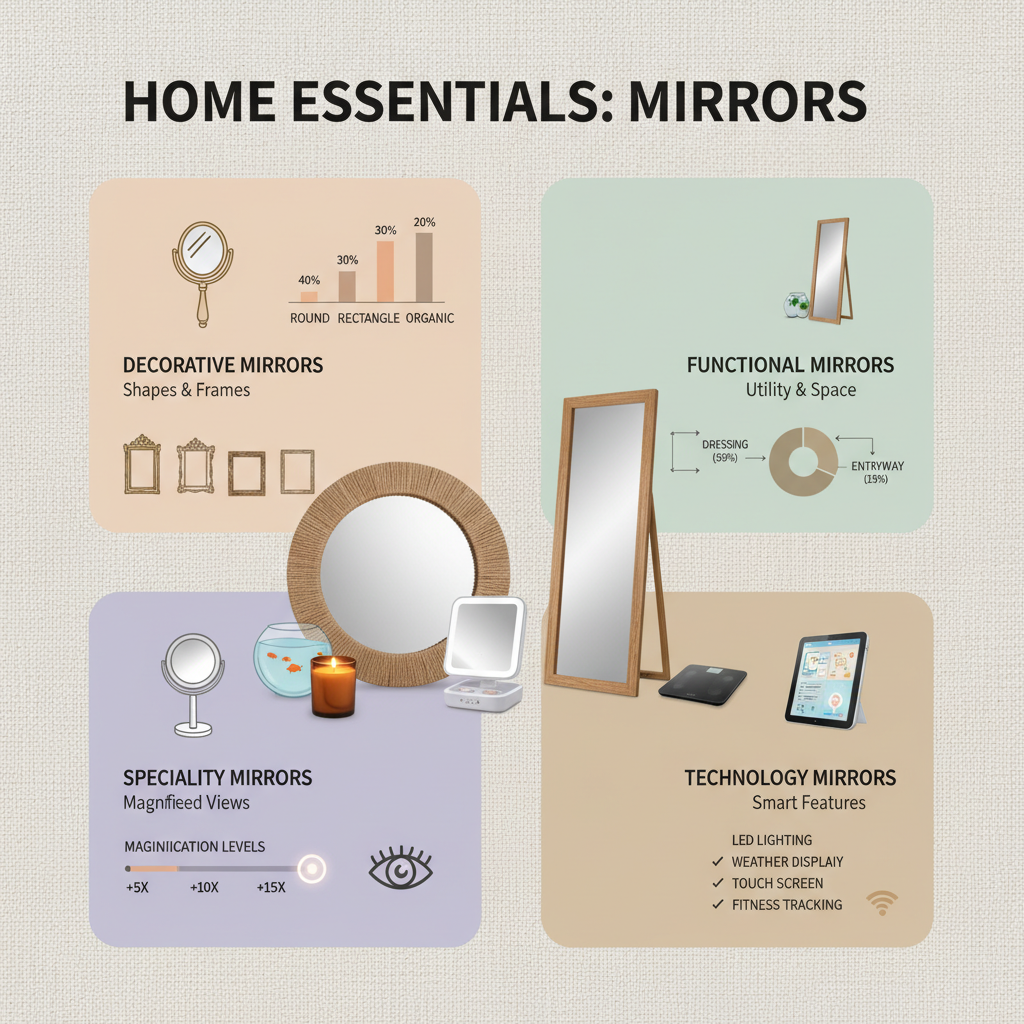
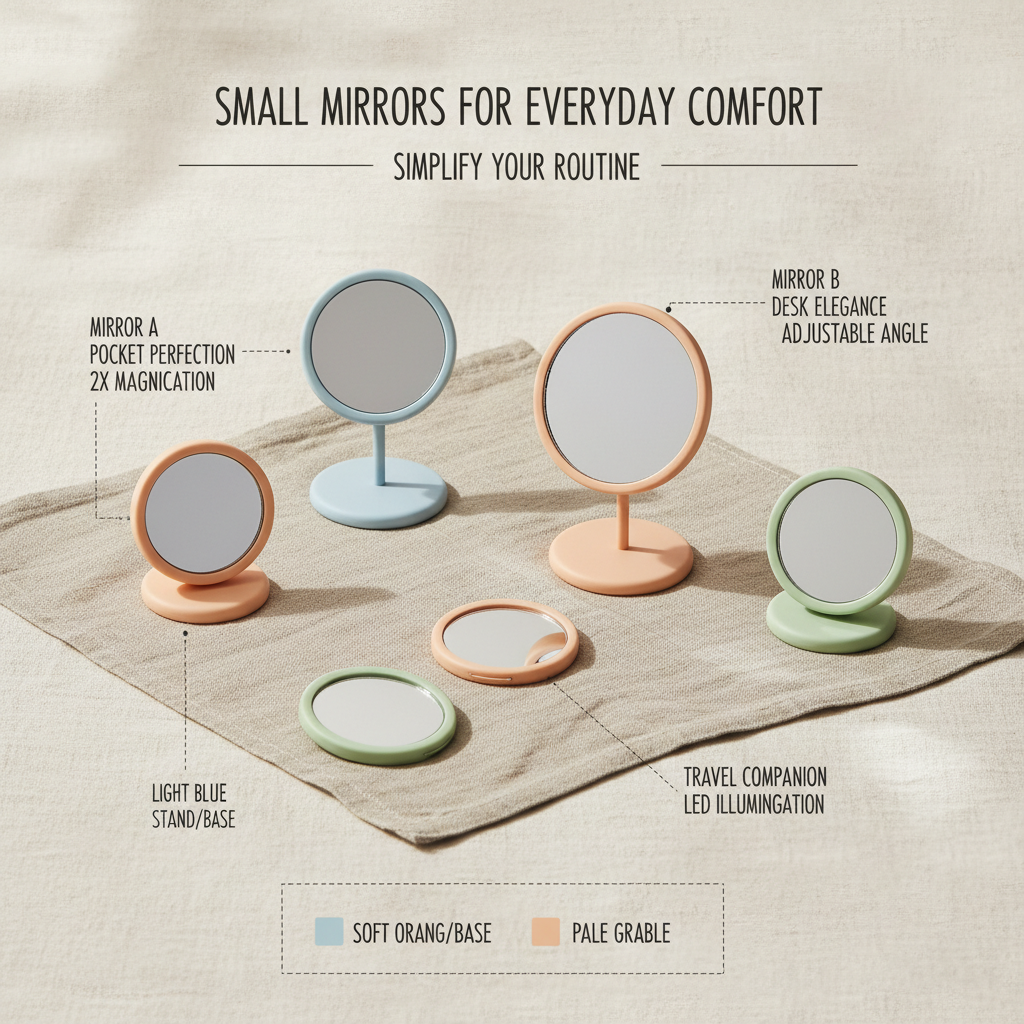
Different types of mirrors aren’t just about vanity; they’re fundamental to a surprising number of industries and applications. From enhancing security systems and optimizing solar energy collection to streamlining manufacturing processes and even enabling cutting-edge medical procedures, the demand for specialized mirrors is constantly growing. Understanding the nuances of these different types – their materials, coatings, and functionalities – is crucial for anyone involved in engineering, construction, or even simply optimizing their home’s energy efficiency. We’ve seen firsthand how choosing the right mirror for the job can mean the difference between a successful project and a costly failure.
The global mirror market is a multi-billion dollar industry, projected to continue its upward trajectory. According to recent reports, the increasing demand for advanced driver-assistance systems (ADAS) – which rely heavily on high-precision mirrors – is a major driving force. Furthermore, the push for renewable energy solutions, particularly concentrated solar power (CSP), is fueling innovation in reflective mirror technology. ISO standards for mirror quality and performance are becoming increasingly stringent, ensuring consistent reliability and safety across various applications. The challenges lie in balancing performance requirements with cost-effectiveness and sustainable manufacturing practices.
At its core, a mirror is a surface that reflects light, but the way it reflects light is what defines its type and purpose. Different types of mirrors aren't just about silvering glass anymore. We’re talking about specialized coatings, precisely engineered shapes, and materials that go far beyond traditional glass. Think about first-surface mirrors – essential for optical instruments where distortion is unacceptable – or dichroic mirrors that selectively reflect certain wavelengths of light. Understanding these variations is vital for selecting the appropriate mirror for a specific task.
Introduction to different types of mirrors
We spend a lot of time out on jobsites, and you quickly realize that “mirror” isn’t a one-size-fits-all kind of thing. It's not just about looking at your reflection. There are countless variations tailored for incredibly specific purposes. You’ve got your standard glass mirrors, of course, but then you get into first-surface mirrors for precision optics, concave mirrors for telescopes and solar collectors, and specialized coatings that filter light for everything from scientific instruments to architectural features. It's a surprisingly complex world.
From a practical standpoint, understanding these differences is about getting the job done right – and safely. Using the wrong mirror in a solar power plant can significantly reduce efficiency, while a subpar mirror in a medical device could compromise a procedure. We've seen projects delayed and budgets blown because someone skimped on the mirror selection. That's why it's critical to appreciate the technology and the options available.
Defining different types of mirrors
Essentially, different types of mirrors manipulate light through reflection. The key lies in the reflective coating – traditionally silver or aluminum – applied to a substrate, most commonly glass. However, that’s just the starting point. The substrate material itself can vary (plastic, acrylic, even metal), and the type of coating, its thickness, and its application method all impact the mirror’s performance. A “first-surface” mirror, for instance, has the reflective coating on the front surface of the glass, eliminating ghosting and distortion that occur with traditional “second-surface” mirrors.
Dichroic mirrors are another fascinating category – these selectively reflect certain wavelengths of light while transmitting others, resulting in vibrant color-splitting effects. You see these used in stage lighting and optical instruments. Then there are concave and convex mirrors, shaped to focus or disperse light, respectively. These shapes are crucial in telescopes, security systems, and even automotive headlights.
The connection to modern industry is direct. High-quality mirrors are essential components in semiconductor manufacturing, laser systems, medical imaging, and countless other high-tech applications. Without precise reflective surfaces, these technologies simply wouldn't function. It's a surprisingly unsung hero of modern innovation.
Key Characteristics of different types of mirrors
One crucial aspect is reflectivity. How much of the incident light is actually reflected? This varies based on the coating material and its quality. Silver typically offers the highest reflectivity, but it's prone to tarnishing. Aluminum is more durable but has slightly lower reflectivity. We always check spec sheets to ensure the reflectivity meets the project's demands.
Durability is another big one. A mirror used in a harsh industrial environment needs to withstand abrasion, corrosion, and temperature fluctuations. Plastic mirrors, while less reflective, are often chosen for their shatter resistance in safety-critical applications. We’ve seen glass mirrors shatter under stress in the field – a dangerous situation that could have been avoided with a more robust material.
Optical quality – the absence of distortion – is paramount in applications like telescopes and laser systems. First-surface mirrors and low-expansion glass are critical for achieving the necessary precision. Spectral selectivity comes into play with dichroic mirrors and filters, where specific wavelengths of light need to be manipulated. Finally, cost-effectiveness always factors in. Balancing performance with budget constraints is a constant challenge.
Applications of different types of mirrors Globally
Different types of mirrors are integral to concentrated solar power (CSP) plants, particularly in sun-belt regions like Spain, California, and North Africa. These plants use vast arrays of heliostats – mirrors that track the sun – to focus sunlight onto a receiver, generating electricity. We’ve worked on projects where even a slight degradation in mirror reflectivity translated into significant energy losses.
In the automotive industry, mirrors are evolving beyond simple rearview aids. They’re now incorporating advanced sensors and displays for driver-assistance systems. In Japan and Germany, auto manufacturers are pushing the boundaries of mirror technology to enhance safety and convenience. We’re seeing a shift towards digital mirrors, using cameras and screens instead of traditional glass.
Medical imaging relies heavily on precision mirrors. Endoscopes, for example, use fiber optics and tiny mirrors to provide doctors with a view inside the human body. We’ve seen this tech significantly improve diagnostic capabilities in hospitals across the US and Europe.
different types of mirrors Performance Comparison
Advantages and Value of different types of mirrors
The tangible benefits are clear: increased efficiency in solar energy systems, improved accuracy in medical diagnostics, and enhanced safety in automotive applications. But it goes deeper than that. Choosing the right mirror can also reduce maintenance costs, extend the lifespan of equipment, and minimize environmental impact.
There’s a sense of trust that comes with knowing you’ve selected a high-quality, reliable component. You're not just buying a reflective surface; you’re investing in the integrity of the entire system. That peace of mind is invaluable, especially in critical applications where failure isn't an option.
Future Trends in different types of mirrors
We’re seeing a lot of innovation in thin-film coatings that enhance reflectivity and durability while reducing weight and cost. There’s also a growing interest in self-cleaning mirrors – coatings that repel dust and water – particularly for large-scale solar installations. These can significantly reduce maintenance requirements.
The integration of smart materials is another exciting area. Mirrors that can dynamically adjust their reflectivity based on environmental conditions are being developed for advanced lighting systems and energy-efficient buildings. And, of course, the rise of digital mirrors – using cameras and displays – is poised to revolutionize automotive and retail applications.
Challenges & Solutions with different types of mirrors
One of the biggest challenges is maintaining consistent quality control, especially with large-scale mirror production. Variations in coating thickness or substrate flatness can significantly impact performance. We address this through rigorous inspection procedures and close collaboration with our suppliers.
Another issue is the environmental impact of mirror manufacturing. Traditional silvering processes can generate hazardous waste. We’re actively exploring more sustainable alternatives, such as using recycled materials and implementing closed-loop manufacturing systems.
Finally, cost remains a constant concern. Balancing performance with affordability is always a challenge. We try to mitigate this by optimizing designs, exploring alternative materials, and leveraging economies of scale.
Summary of Challenges and Solutions for different types of mirrors
| Challenge |
Impact |
Solution |
Implementation Cost (1-10) |
| Quality Control |
Reduced performance, increased failure rate |
Rigorous inspection, supplier collaboration |
6 |
| Environmental Impact |
Hazardous waste generation |
Recycled materials, closed-loop systems |
8 |
| Cost |
Reduced project budget |
Design optimization, alternative materials |
5 |
| Durability in Harsh Environments |
Reduced lifespan, increased maintenance |
Protective coatings, robust materials |
7 |
| Optical Distortion |
Inaccurate readings, compromised imaging |
First-surface mirrors, low-expansion glass |
9 |
| Supply Chain Disruptions |
Delays, increased costs |
Diversified sourcing, strategic partnerships |
4 |
FAQS
A first-surface mirror has the reflective coating on the front surface of the glass, eliminating double reflections and ghosting. This makes them ideal for precise optical instruments where image clarity is paramount. Second-surface mirrors, more common and affordable, have the coating on the back. While sufficient for many applications, they can suffer from slight distortion due to the glass thickness and air gap. For critical applications, the extra cost of a first-surface mirror is well worth the improved performance.
Selecting mirrors for a CSP plant requires careful consideration of several factors. Reflectivity is critical – you want to maximize the amount of sunlight focused on the receiver. Durability is also key, as these mirrors will be exposed to harsh weather conditions for years. Consider the angle of incidence of sunlight at your location and choose mirrors with a coating optimized for that angle. Finally, cost-effectiveness is important, but don’t compromise on quality – a small investment in better mirrors can pay off significantly in terms of energy production.
Plastic mirrors offer several advantages, primarily their shatter resistance and lighter weight. They’re often used in safety-critical applications where glass breakage is a concern. However, they typically have lower reflectivity and are more prone to scratching than glass mirrors. They’re also less resistant to temperature extremes. Plastic mirrors are a good option for applications where safety is paramount, but image quality isn't as critical.
A dichroic mirror selectively reflects certain wavelengths of light while transmitting others. This creates vibrant color-splitting effects. They're widely used in stage lighting to create dramatic color washes, in optical instruments for filtering light, and in some architectural applications to create unique visual effects. The specific wavelengths reflected and transmitted depend on the coating applied to the mirror.
Silver is highly reflective but prone to tarnishing due to exposure to sulfur compounds in the air. To prevent tarnishing, it's crucial to handle mirrors carefully and avoid touching the reflective surface with bare hands. Protective coatings can also be applied to the silver layer to slow down the tarnishing process. Proper storage in a dry, airtight environment can also help prolong the mirror’s lifespan.
We’re seeing exciting advancements in several areas. Thin-film coatings are becoming more sophisticated, offering enhanced reflectivity and durability. Self-cleaning mirrors are gaining traction, reducing maintenance costs. The integration of smart materials, enabling dynamic reflectivity adjustment, is a major area of research. And, of course, the rise of digital mirrors—using cameras and screens—is poised to transform industries like automotive and retail.
Conclusion
Different types of mirrors are far more than just reflective surfaces; they are critical components in a vast array of technologies and industries. From maximizing energy efficiency in solar power plants to ensuring precision in medical imaging, the selection of the right mirror can significantly impact performance, safety, and cost. Understanding the nuances of reflectivity, durability, optical quality, and spectral selectivity is paramount for making informed decisions.
Looking ahead, continued innovation in materials, coatings, and manufacturing processes will unlock even greater possibilities. Embracing sustainable practices and exploring emerging technologies like smart mirrors will be essential for shaping the future of this often-overlooked but vitally important field. To learn more about our specific solutions and expertise, visit our website: www.chnmst.com